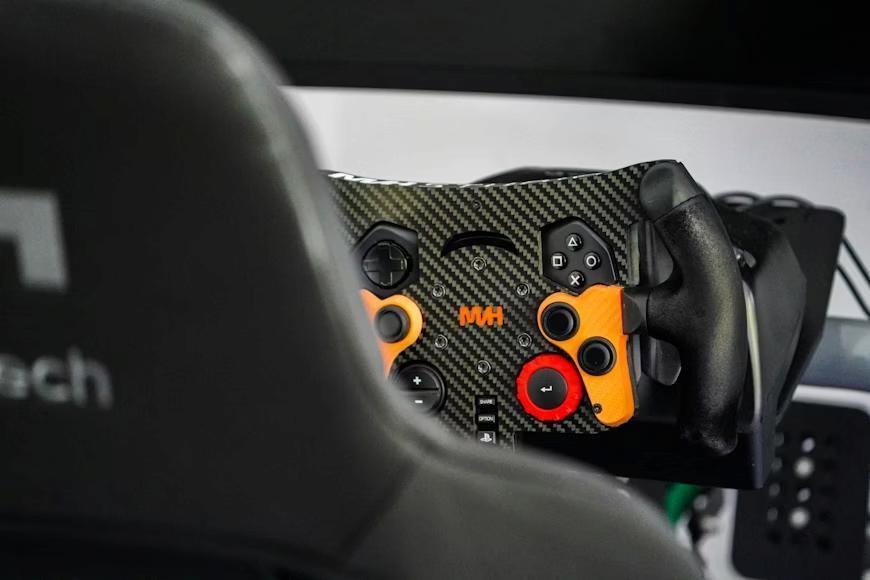
Sim racing has moved far beyond casual gaming. With precise physics, responsive hardware, and carefully modelled environments, it delivers a driving experience built on control and realism. From how cars react under braking to how tracks influence handling, sim racing rewards skill, focus, and consistency at every level.
Sim racing is built around realism rather than spectacle. Every movement—steering, braking, and acceleration—is measured and translated into realistic vehicle behaviour. The experience feels grounded because the systems behind it are designed to mimic how real cars respond under pressure.
For many newcomers, sim racing offers an accessible way to experience disciplined driving. Structured environments such as Sim Racer UK show how sim racing in the UK prioritises realism, controlled conditions, and skill development over casual gameplay.
What truly defines sim racing is its emphasis on consistency. Precision matters more than speed, and control outweighs aggression.
How Sim Racing Works
Sim racing, short for simulation racing, is a form of virtual driving designed to replicate real-world vehicle dynamics as accurately as possible. Unlike arcade-style games, it removes exaggerated mechanics and places responsibility entirely on the driver.
The experience is shaped by a few defining characteristics that separate sim racing from traditional racing games:
- Accurate vehicle physics rather than scripted behaviour
- Realistic braking and throttle response
- Tracks modelled to reflect real layouts and surfaces
- Outcomes driven by driver input, not shortcuts
This approach encourages learning and discipline rather than instant results.
How Sim Racing Replicates Real Driving
Realism in sim racing comes from how multiple systems work together. Software continuously calculates how the car should behave based on driver input, speed, and surface conditions. This creates a direct link between action and consequence.
Several core elements contribute to this realism:
- Vehicle physics modelling
- Weight transfer during acceleration and braking
- Tyre grip changes under load
- Predictable handling limits
- Weight transfer during acceleration and braking
- Track and surface detail
- Kerbs and elevation changes affect stability
- Grip varies across different sections of the track
- Kerbs and elevation changes affect stability
- Environmental conditions
- Weather influences traction and visibility
- Reduced grip requires adjusted driving technique
- Weather influences traction and visibility
These systems ensure that drivers must adapt rather than rely on fixed patterns.
The Role of Sim Racing Hardware
Hardware is essential for translating digital calculations into physical sensation. Even modest setups can feel realistic when properly configured, while advanced equipment enhances immersion further.
A typical sim racing setup includes several key components:
- A steering wheel that provides resistance and feedback
- Pedals that respond to pressure for braking and acceleration
- A stable seating position to maintain consistent control
One of the most important features is force feedback. This allows drivers to feel changes in grip, steering weight, and road texture, making the experience intuitive rather than purely visual.
Software That Powers the Experience
Sim racing software prioritises consistency and realism over dramatic presentation. Each lap behaves logically, allowing drivers to learn and improve through repetition.
The software simulates several real-world variables, including:
- Vehicle balance and suspension response
- Tyre wear and temperature changes
- Fuel load impact on handling
Because behaviour remains consistent, drivers can identify mistakes and refine technique over time.
kill Development Through Sim Racing
Sim racing naturally encourages structured improvement. Instead of relying on reaction speed alone, drivers learn to manage inputs with care and precision.
Over time, sim racers typically improve in areas such as:
- Smooth throttle application
- Progressive braking
- Controlled steering inputs
- Anticipation of vehicle behaviour
Many drivers choose structured environments like Sim Racer UK to reinforce these skills, as organised formats help build discipline and consistency.
Common Misconceptions About Sim Racing
Despite its growth, sim racing is still misunderstood. One common belief is that expensive equipment is essential, when in reality skill has a far greater impact than hardware.
Another misconception is that driving faster requires aggressive inputs. In sim racing, smoother driving almost always produces better results. Finally, realism is often associated with graphics, when physics and feedback play a much larger role.
Recognising these misconceptions helps beginners approach sim racing with realistic expectations.
Getting Started With Sim Racing
Starting sim racing does not require complex preparation. A simple, comfortable setup and a patient mindset are far more valuable than advanced configuration.
A sensible beginner approach includes:
- Setting up equipment at a natural driving height
- Using default settings initially
- Practising short, focused sessions
- Prioritising consistency over lap times
This gradual approach builds confidence without frustration.
Practical Tips for a Better Sim Racing Experience
Small adjustments can significantly improve realism and control when applied thoughtfully.
- Sit in a natural driving posture to reduce fatigue
- Apply braking pressure smoothly rather than abruptly
- Focus on clean, consistent laps instead of speed
- Reduce driving aids gradually as confidence increases
These habits support long-term improvement without overwhelming new drivers.
Why Sim Racing Continues to Grow
Sim racing continues to attract a wide audience because it balances accessibility with depth. It offers competition without unnecessary risk and rewards learning over time.
As technology improves, structured services such as Sim Racer UK highlight how sim racing is increasingly viewed as a disciplined driving activity rather than casual entertainment. This balance is central to its continued growth.
Final Thoughts
Sim racing delivers a convincing representation of real driving by combining accurate software, responsive hardware, and disciplined practice. It allows drivers to develop control, awareness, and consistency in a safe and structured environment.
For those seeking a realistic, skill-focused driving experience, sim racing offers depth without unnecessary complexity. With structured environments and realistic setups—such as those associated with Sim Racer UK—it becomes a purposeful and rewarding pursuit.
About the Author